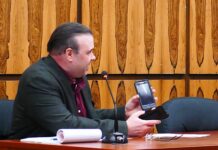
Luzerne County’s prison system has started activating a mobile phone app for staff to track inmates, county Acting Correctional Services Division Head Stanley Fiedorczyk said during Tuesday’s County Council Correctional Services Committee meeting.
Jennifer Learn-Andes | Times Leader
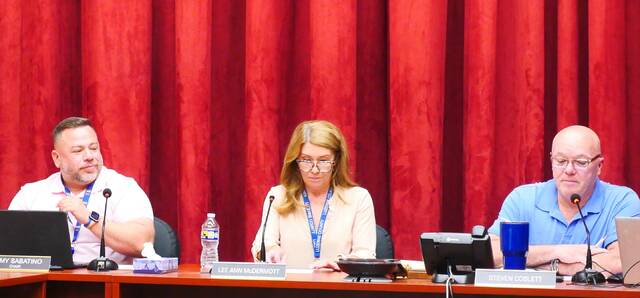
Luzerne County Council’s Correctional Services Committee heard a presentation Tuesday from Acting Correctional Services Division Head Stanley Fiedorczyk. The committee members, from left: Jimmy Sabatino, Vice Chair LeeAnn McDermott, and Chairman Steve Coslett.
Jennifer Learn-Andes | Times Leader
Luzerne County’s prison system has started activating a mobile phone app for staff to track inmates, county Acting Correctional Services Division Head Stanley Fiedorczyk said Tuesday.
Fiedorczyk also briefed council’s Correctional Services Committee on a range of matters, including workers’ successful detection of an inmate suicide attempt, the need for vehicle fleet updates, and the continued challenge of inmates requiring outside medical treatment, which contributes to overtime.
He also credited both staff and inmates for recent sprucing up of the prison interior and said he is working to maximize opportunities for inmates to assist in community projects.
Fiedorczyk, who became acting overseer when James Wilbur resigned in March, said the mobile app — CorreTrak — was purchased several years ago but never implemented.
Workers now carry phones containing the app when they make their rounds so they can scan QR codes outside cells and in other areas to verify they have checked on each inmate logged in the system, he said.
Inmates must wear wristbands with QR codes, and eventually the prison will train workers to instantly track and retrieve data on the movement of each inmate inside the facility and when they are transported elsewhere, he said.
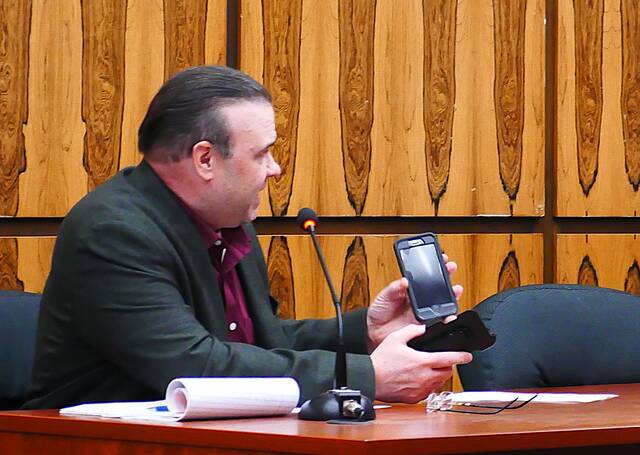
“Everything is going to be going through these,” Fiedorczyk said as he held up a phone, describing it as an “extremely advanced system.”
Regarding the suicide attempt, Fiedorczyk said sensing something was wrong, staff rapidly detected and prevented it.
“The staff reacted to this so amazingly fast, you could probably use the video as a training video,” he said of the response. “I’m really proud of them.”
_________
GET HELP
The 988 Suicide and Crisis Lifeline is a hotline for individuals in crisis or for those looking to help someone else. To speak with a trained listener, call 988. Visit 988lifeline.org for crisis chat services or for more information.
_________
On the subject of his fleet, Fiedorczyk said he is hoping to obtain several vehicles to transport inmates to state facilities, work release, pre-work release community service, local court proceedings, and medical visits. The fleet is aging and not sufficient for transport demands, he said, noting he is not picky and is willing to accept used vehicles to save money.
County Manager Romilda Crocamo said she contacted the county Transportation Authority about the possible reuse of any vans it is removing from service and is exploring other options.
Fiedorczyk said he wants to increase the use of inmate labor, with court approval and careful review, to help communities and provide inmates with a “purpose” and “self-pride.”
He passed out before-and-after photographs of prison sections that have been freshened up with paint through the efforts of staff and inmates.
“We’re really moving. We’re really shaking,” Fiedorczyk said. “Everybody’s coming together. We’re actually making the prison a better place.”
Medical visits
Fiedorczyk echoed a concern of his predecessor about the need for outside medical care for inmates.
The trend largely stems from medical problems tied to inmate substance use disorder and the incarceration of more older inmates, officials have said.
Multiple prison correctional officers must transport and guard each inmate requiring medical treatment the entire time they are outside the prison, officials said. Outside treatment is necessary when the required level of care cannot be provided by the prison’s medical unit.
The county had to pay overtime to 135 prison workers in March solely due to medical transport and supervision while inmates received hospital care, he told the committee Tuesday. The figure was 96 workers in April and 60 so far in May, he said.
“This is where our problem lies with overtime,” he said.
Councilwoman and Committee Vice Chair LeeAnn McDermott asked if the hospital supervision must be provided by prison staff.
Crocamo said the prison must handle the duty because the court has ordered the inmates under the custody and control of the county prison. Hospitals also require the prison to guard its inmates, she said.
Hospital security workers won’t “interfere” with the county’s direct supervision of inmates in their facility, Fiedorczyk said.
Councilwoman Denise Williams asked how the prison determines which inmates must be sent out for treatment.
Fiedorczyk said the prison medical department is “extremely small and very limited.”
Crocamo said Wellpath LLC, the prison’s outside medical services provider, determines which inmates require hospitalization and outside medical treatments — not county employees.
Reach Jennifer Learn-Andes at 570-991-6388 or on Twitter @TLJenLearnAndes.