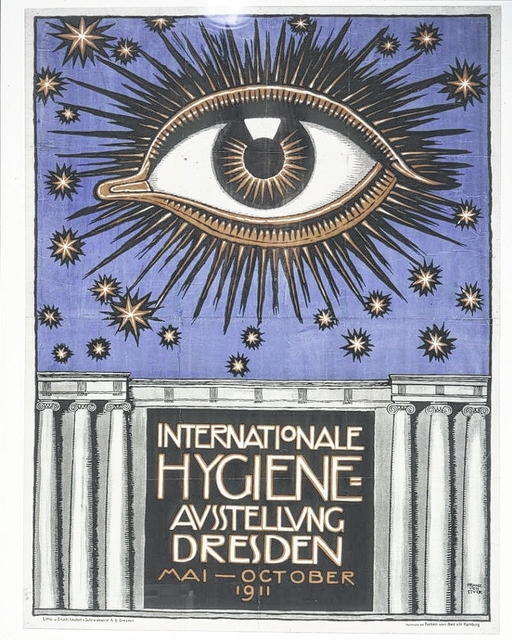
DALLAS TWP. — The United States Holocaust Memorial Museum and Misericordia University are presenting the provocative exhibition, “Deadly Medicine: Creating the Master Race,’’ that outlines how Adolph Hitler was supported by medical doctors and researchers in his quest for improving the Aryan race.
The exhibition begins Wednesday, Jan. 18 in the Pauly Friedman Art Gallery in Sandy and Marlene Insalaco Hall.
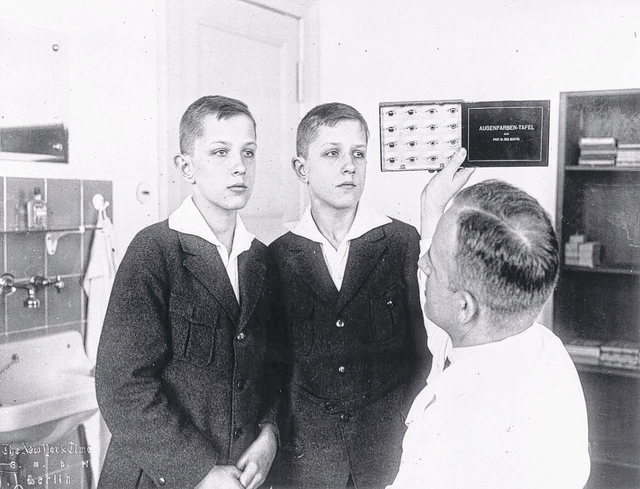
The United States Holocaust Memorial Museum’s traveling exhibition examines how the Nazi leadership, in collaboration with individuals in professions traditionally charged with healing and the public good, used science to help legitimize persecution, murder and, ultimately, genocide.
The interactive exhibition, which has been shown at the United Nations and around the world, will be on display through Tuesday, March 14. It is open free to the public.
Misericordia University is also holding the Medical and Health Humanities Deadly Medicine Speaker Series to complement the exhibition. The speaker series kicks off 7 p.m. Thursday, Jan. 19 with the presentation “Should Good Come Out of Evil?” by Rabbi Larry Kaplan of Temple Israel in Wilkes-Barre.
The speaker series also features presentations by Matthew Wynia, M.D., director of the Center for Bioethics and Humanities at the University of Colorado Anschutz Medical Campus, and Dr. Patricia Herberer Rice, United States Holocaust Memorial Museum on Jan. 26; and bioethicist Arthur Caplan, Ph.D. of New York University Langone Medical Center and Holocaust survivor Eva Mozes Kor on March 14. Additional presentations are being made Feb. 1, Feb. 7, Feb. 22 and March 1.
The presentations are open, free to the public but, due to seating limitations, tickets are required for some events. Call the Misericordia University Box Office at 570-6714 to reserve free tickets. Tickets are available beginning Nov. 25. For more information about the programming, log on to www.misericordia.edu/news.
The eugenics theory – a social philosophy advocating the improvement of human genetic traits through higher rates of reproduction for people with desired traits, or reduced birth rates and sterilization of people with less desired traits – sprang from turn-of-the-20th-century scientific beliefs asserting that Charles Darwin’s theories of “survival of the fittest’’ could be applied to humans. Supporters, spanning the globe and political spectrum, believed through careful controls on marriage and reproduction, a nation’s genetic health could be improved.
According to the United States Holocaust Memorial Museum, the Nazi regime was founded on the conviction that “inferior’’ races, including the so-called Jewish race, and individuals had to be eliminated from German society so the fittest “Aryans’’ could thrive. The Nazi state fully committed itself to implementing a uniquely racist and anti-Semitic variation of eugenics to “scientifically’’ build what it considered to be a “superior race.’’
By the end of World War II, six million Jews had been murdered. Millions of others also became victims of persecution and murder through Nazi “racial hygiene’’ programs designed to cleanse Germany of “biological threats’’ to the nation’s “health,’’ including “foreign-blooded’’ Roma and Sinti (Gypsies), persons diagnosed as “hereditarily ill’’ and homosexuals, according to the museum. In German-occupied territories, Poles and others belonging to ethnic groups deemed “inferior’’ were also murdered.
The gallery is closed on Mondays and for all university holidays and snow days. Gallery hours are 10 a.m. to 8 p.m. Tuesday through Thursday; 10 a.m. to 5 p.m. Friday and 1 to 5 p.m. Saturday and Sunday.
For more information, log on to www.misericordia.edu/art or contact Dona Posatko, gallery director, at 570-674-6250.